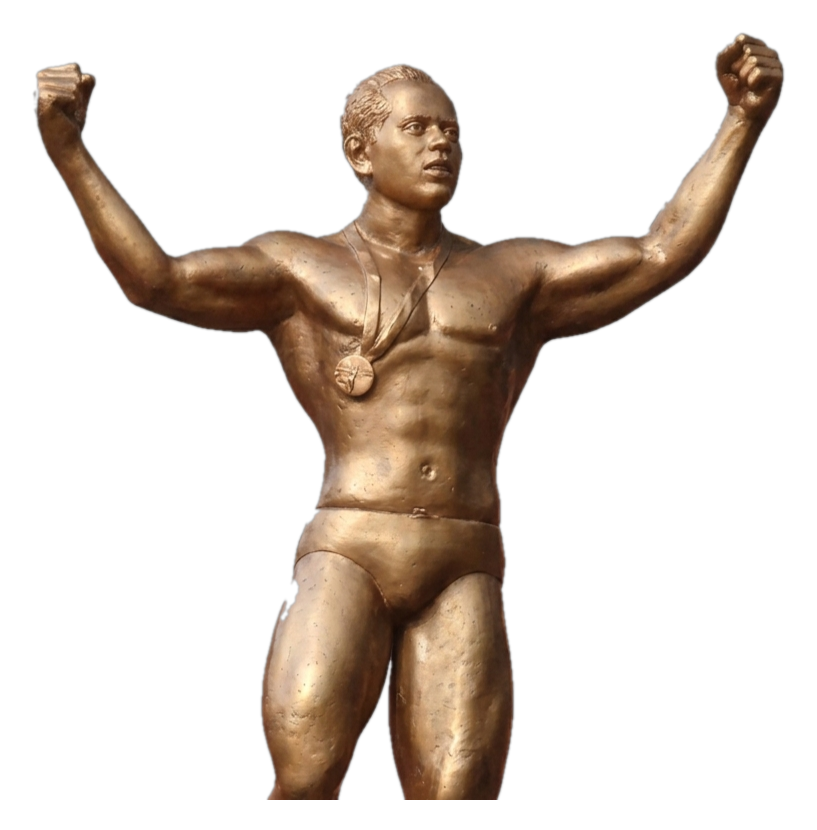
The Complete Story · Five Chapters
The Life of Khashaba Jadhav
From a wrestling family in a Satara village to an Olympic podium in Finland — and back to a policeman's life in the same district. Read it in order, or start anywhere.
Early Life & Goleshwar
Born into a household that “lived and breathed wrestling.” The akhada, the Kolhapur patronage system, and a boy repeatedly told he was too small.
Read chapter one → 2The Hardships
Passed over by selectors, restored by a Maharaja's intervention, and sent to Finland on a mortgaged house and a village's savings.
Read chapter two → 3The Homecoming
151 bullock carts, seven hours, ten kilometres — how rural Maharashtra welcomed home an Olympic medallist.
Read chapter three → 4Service & Later Life
A knee injury, twenty-seven years in the police force, a house called Olympic Niwas, and a fight for his own pension.
Read chapter four → 5The Final Chapter
The accident of 14 August 1984, the family's long campaign for justice, and the recognition that is still unfinished.
Read chapter five →The Olympics: London 1948 & Helsinki 1952
The full bout-by-bout record of both Games, the rest-period controversy, and what the 1952 Helsinki Olympics meant to a world seven years out of war.
Read the Olympics page →Overview
A Life in Brief
Born at Goleshwar
15 January — youngest of five sons of Dadasaheb Jadhav, a renowned wrestler of the village.
Schooling and the akhada
Tilak High School, Karad; later Rajaram College, Kolhapur, where he goes on to complete a BA and an LLB. Rejected as “too weak,” he appeals to the principal and wins his place.
London Olympics — sixth in the world
Funded by the Maharaja of Kolhapur. Beats Australia and the USA; loses to Iran.
Olympic bronze at Helsinki
23 July — bantamweight freestyle bronze; independent India's first individual Olympic medal.
Joins the Maharashtra Police
Begins twenty-seven years of service; repays his Helsinki debts through exhibition bouts.
Asian Games torch, and retirement
Honoured at the Delhi Asiad; retires from the police force the same year.
Death near Karad
14 August — killed in a motorcycle accident, aged 59.
Posthumous honours
Chhatrapati Puraskar; then the Arjuna Award, sixteen years after his death.
A stadium takes his name
The Commonwealth Games wrestling venue in New Delhi is renamed the K. D. Jadhav Indoor Hall.
The Foundation is formed
13 August — the Kusteeveer Khashaba Jadhav Foundation is incorporated to carry the work forward.
Birth centenary
One hundred years since his birth — and a major feature film on his life due in cinemas.
Download the Fact Sheet: Khashaba Jadhav’s Journey (PDF)
Further Reading
More on His Story
- How KD Jadhav became the first Indian to win an Olympic medal — Olympics.com, the International Olympic Committee's official site.