Chapter Four · 1955 – 1982
Service & Later Life
An injury, twenty-seven years in uniform, a house called Olympic Niwas, and a fight for his own pension.
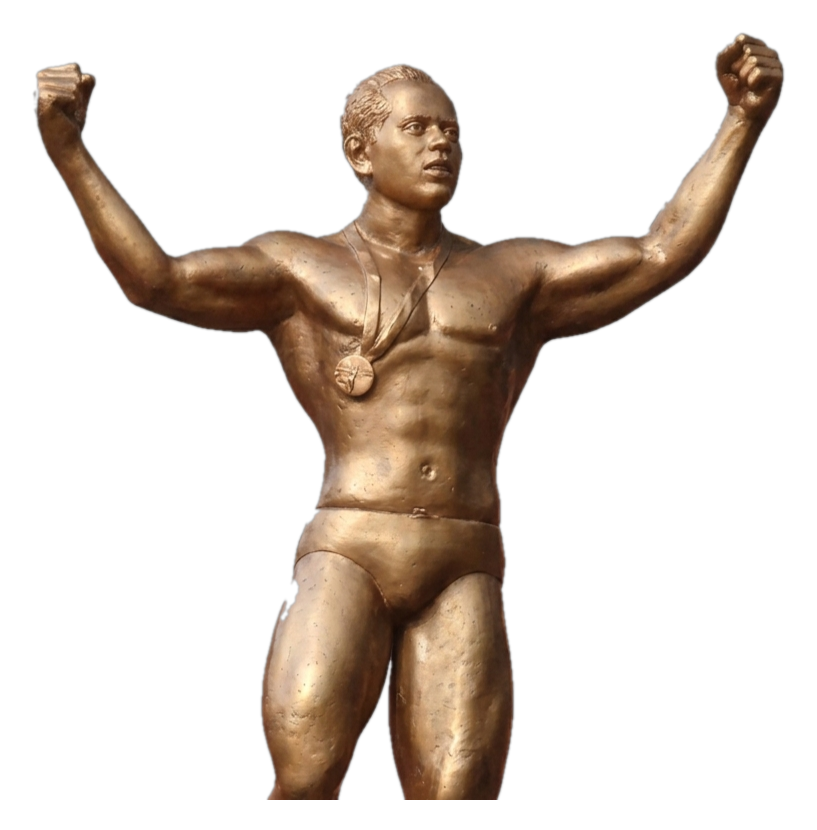
Khashaba Jadhav was 26 when he won his Olympic medal. He should have had at least one more Games in him. A knee injury ended that: he was unable to compete at the 1956 Melbourne Olympics, and his international career was effectively over at its peak.
The police years
In 1955 he joined the Maharashtra Police as a sub-inspector, beginning twenty-seven years of service. He served as a sports instructor, trained constables, and won a string of departmental wrestling competitions. He went twenty-two years without a promotion despite repeated requests, and was finally appointed Assistant Commissioner of Police only in June 1982 — six months before he retired that December.
Through those years he continued to wrestle in police tournaments and to repay, bout by bout, the money that had sent him to Helsinki.
Olympic Niwas
He lived simply, in the house at Goleshwar known as Olympic Niwas. In later years the building fell into disrepair, and his old training akhada with it — a decline that journalists visiting the village have repeatedly noted with something close to shame.
The pension
The hardest fact of Khashaba's later life is that he had to fight for his own pension. The man who had given India its first individual Olympic medal spent part of his final years petitioning the state for what he was owed, and lived in genuinely straitened circumstances.
By some accounts his final monthly pay on retirement in 1982 amounted to a little over two thousand rupees.
1982: a moment of recognition
In 1982, the year of his retirement, Delhi hosted the Asian Games. Khashaba was honoured as a participant in the torch relay — one of the few occasions in his lifetime on which the Indian state formally acknowledged what he had done thirty years earlier.